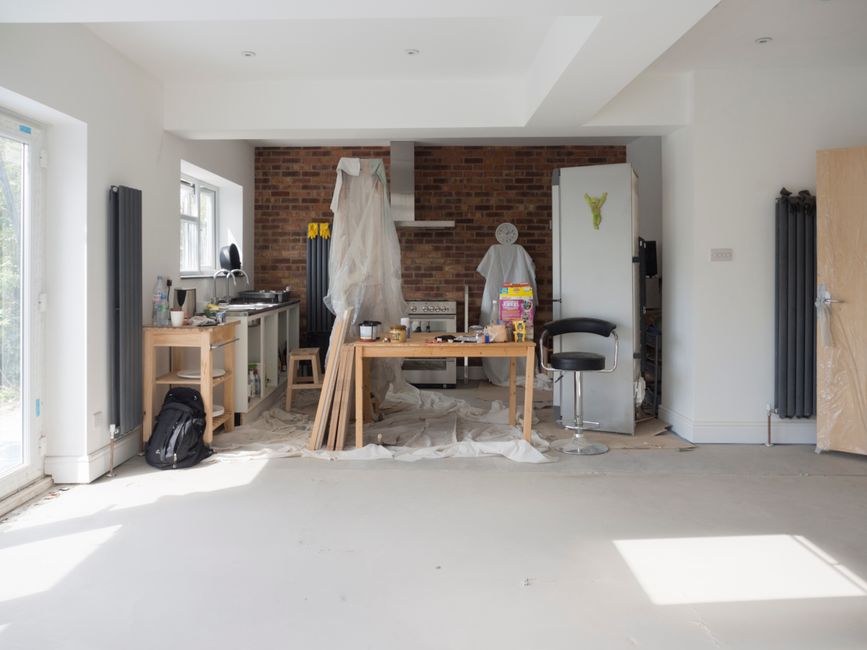
Project: 3-bed Isle of Dogs flat cleared after renovation
A post-renovation flat can look finished at first glance, then you notice the leftovers: broken packaging in the hallway, dusty offcuts by the skirting, a tired sofa that no longer fits the new layout, and a pile of materials that somehow multiplied overnight. This project on a 3-bed Isle of Dogs flat cleared after renovation is exactly that sort of job: part practical reset, part final polish. It is the stage where the property stops feeling like a worksite and starts feeling like a home again.
In a busy London setting, that final clearance matters more than people sometimes expect. It affects presentation, safety, handover timing, recycling, and the client's peace of mind. It also helps avoid the awkward bit where the builders are gone but the clutter is still there. Let's face it, nobody wants to move back into a newly improved flat and trip over plasterboard scraps. This guide walks through how a post-renovation flat clearance works, what to watch for, and how to get the best result without creating extra stress.
Table of Contents
- Why it matters
- How it works
- Key benefits and practical advantages
- Who this is for and when it makes sense
- Step-by-step guidance
- Expert tips for better results
- Common mistakes to avoid
- Tools, resources and recommendations
- Law, compliance, standards, or best practice
- Options, methods, or comparison table
- Case study or real-world example
- Practical checklist
- Conclusion
- Frequently asked questions
Why Project: 3-bed Isle of Dogs flat cleared after renovation Matters
A renovation always leaves a trail. Even when the build is well managed, the final few days can produce more loose ends than you'd expect: packaging, packaging inside packaging, old fixtures, surplus tiles, broken-down wardrobes, paint tins, underlay, and a surprising amount of fine dust. On a 3-bed flat, that builds up fast. In a compact property, every bag and board seems to sit in the wrong place, and suddenly the whole place feels unfinished.
This matters for three practical reasons. First, safety: a flat clearance reduces trip hazards, sharp edges, and hidden debris. Second, usability: the property becomes usable again, which is the whole point of the renovation. Third, presentation: whether the flat is for the owner, a tenant, or a sale, the final look says a lot. A clean handover is not just cosmetic. It tells people the project has been properly completed.
In areas like Isle of Dogs, where flats often have tight access, lifts, shared entrances, and neighbours who are very aware of what is going on, timing and tidiness matter even more. Noise, lift use, and common-area blockages can become a real issue if the clearance is left too late. A well-planned post-renovation clearance keeps the job moving and avoids that slightly chaotic Friday-afternoon scramble. You know the one.
Expert summary: The best renovation clearances are planned before the last tool is packed away, not after the dust has settled. That small change usually saves time, reduces confusion, and makes the flat feel complete much sooner.
If you are coordinating multiple trades, the clearance phase also links neatly with broader property services such as flat clearance, builders waste clearance, and, where mixed items remain, furniture clearance. That combination is often the difference between a tidy project close and a messy, drawn-out finish.
How Project: 3-bed Isle of Dogs flat cleared after renovation Works
A post-renovation clearance is not just a van and a few strong arms, although fair enough, that is part of it. Good clearance work follows a sequence. The property is assessed, items are grouped, access is checked, and the team removes waste in a way that suits the building and the material types involved.
For a 3-bed flat, the process usually starts with a walk-through. The team looks at what needs to go, what stays, what may need separating, and whether anything requires careful handling. Renovation projects often create mixed waste streams. For example, you may have timber offcuts, old carpet, cardboard, broken fixtures, and a few bulky items left in the bedrooms. If the wrong things are mixed together, sorting becomes slower and disposal becomes less efficient.
The next step is segregation. This is where professional judgement matters. Reusable furniture may be set aside, recyclable materials separated where possible, and general waste grouped safely. Some items are straightforward. Others are stubborn. A boxed-up pile of odds and ends can look harmless until you start lifting it and discover chipped ceramics, sharp screws, and half a bag of adhesive remnants. Not glamorous. Very real.
Access is another major factor. In a block on the Isle of Dogs, the route from the flat to the vehicle can be just as important as the clearance itself. Stairs, lifts, loading bays, time restrictions, and shared spaces all affect the plan. A tidy route protects the building, keeps neighbours happy, and helps the job move without unnecessary stops.
Once the waste is removed, a final sweep-up is usually needed. Renovation dust has a talent for hiding under radiators, in corners, and along door frames. Even a careful clearance benefits from a last check. The space should feel ready for decorating touches, final snagging, or immediate reoccupation.
Key Benefits and Practical Advantages
The obvious benefit is a clean flat. But the real value goes further than that.
- Faster handover: Once the debris is removed, contractors, landlords, or owners can finish the property without delay.
- Safer rooms: Loose screws, broken timber, and leftover packaging are a nuisance and a hazard.
- Better recycling outcomes: When waste is separated properly, more materials can be diverted from general disposal.
- More accurate room use: It is easier to assess furniture placement, storage, and final styling in an empty, clean space.
- Less stress: There is something deeply calming about seeing a flat go from "work in progress" to "done."
Another practical advantage is cost control. A well-managed clearance can prevent repeat visits and last-minute panic jobs. If rubbish is left in multiple rooms or stored in awkward piles, it often takes longer to shift. Longer jobs are rarely the fun kind, and they can lead to extra disruption too. Planning it properly from the outset usually gives a cleaner outcome and a better overall value.
For clients who care about sustainability, this stage is also where responsible disposal really shows its worth. Items that can be reused, recycled, or handled separately should be directed that way. If environmental handling is important to you, it is worth reviewing a provider's approach to recycling and sustainability before work begins.
Who This Is For and When It Makes Sense
This kind of clearance suits a wide range of people, and the common thread is simple: the renovation has finished, but the property still isn't truly finished.
Typical situations include:
- Homeowners who have upgraded kitchens, bathrooms, flooring, or storage and want the flat cleared properly afterwards.
- Landlords preparing a 3-bed property for new tenants after a refurbishment.
- Letting agents managing a turnaround where speed and presentation are both important.
- Developers and project managers who need the space ready for snagging, photography, or final client sign-off.
- Occupiers who stayed elsewhere during works and want a clean, comfortable return.
It makes sense when the renovation has created a mix of waste and leftover items that do not belong in the finished home. It also makes sense when the flat needs to be handed back in a clean condition, or when bulky items simply got in the way during the build and now need removing. Sometimes the job is obvious. Sometimes it is just a few awkward bits and pieces that have become a nuisance. Either way, that is enough.
If the project involves a larger quantity of mixed household contents alongside renovation waste, a broader home clearance approach may be more efficient. Where the focus is on a whole property turnround, a house clearance framework can also help organise the work logically, even in a flat setting.
Step-by-Step Guidance
Here is a clear way to manage the process without overcomplicating it.
- Walk the flat room by room. Make a simple list of everything that needs removing. Include cupboards, balconies, utility corners, and the awkward bit behind the door.
- Separate clear categories. Keep renovation waste, bulky furniture, reusable items, and general rubbish apart where possible.
- Check access and building rules. Note lift use, parking, stair access, and any block restrictions on timings or loading.
- Photograph larger items if needed. It helps with planning, especially where heavy furniture or mixed waste is involved.
- Choose the right service mix. Some jobs only need waste removal. Others need a combination of clearance and disposal support.
- Schedule the clearance after the main works. That sounds obvious, but timing is where many projects slip up.
- Do a final room check once the clearance is done. Look for hidden fixings, stray packaging, and dust in corners.
To be fair, step six is the one that saves the most headaches. Clearing too early can leave you with materials in the way for the rest of the build. Clearing too late can mean the flat stays in half-finished limbo. The sweet spot is usually after the messy renovation work has ended but before final styling or deep cleaning.
If you are dealing with furniture that will not be reused, it can help to look at the dedicated furniture disposal route rather than treating everything as plain rubbish. That kind of distinction is small on paper, but in practice it can make the job cleaner and quicker.
Expert Tips for Better Results
Small choices often decide whether a clearance feels smooth or slightly chaotic. These are the details that matter.
1. Keep the final sweep separate from the heavy lift
There is a difference between removing items and making the flat ready to use. If you try to do both at the same time, the work slows down. A better approach is to clear the large items first, then finish with dust and small debris. It is a simple rhythm, but it works.
2. Protect floors and common areas
Renovation dust loves to travel. So do chips of plaster, grit, and the odd screw that somehow escapes every pocket and tray. Use protection on communal routes where needed and keep the exit path tidy. Neighbours notice. Building managers notice too.
3. Think about what can be reused
Not everything has to go into general waste. Sometimes a door, light fitting, storage unit, or spare piece of furniture can be reused elsewhere. Even when an item is not being kept, it is worth pausing before disposal. That's just sensible.
4. Label mixed piles before they become one giant pile
Honestly, once timber, packaging, old fixings, and soft furnishings get mixed together, it gets fiddly. A few labels or separate stacks at the start can save a lot of sorting later. It sounds slightly over-organised, but the end result is better.
5. Ask about disposal approach before the work starts
If you care about how the clear-out is handled, ask how materials are sorted, transported, and processed. That is where providers show their standards. A trustworthy team will be clear about their process and what can be handled responsibly under normal UK waste practice.
For projects where the renovation has produced heavier building materials, a dedicated builders waste clearance service may be the right fit. For more general rubbish, waste removal can be a cleaner, simpler choice. The key is matching the service to the actual waste stream, not just the word "clearance."
Common Mistakes to Avoid
Most clearance problems are preventable. The tricky bit is that they often look minor at first.
- Leaving the clearance until the last minute. This creates pressure and can interfere with finishing works.
- Mixing reusable items with disposable waste. It slows the job and can reduce recycling opportunities.
- Ignoring access constraints. A lift booking or parking issue can make a straightforward job awkward fast.
- Underestimating dust and small debris. The obvious waste goes quickly; the hidden debris takes time.
- Not checking what the service actually covers. Some jobs need furniture, some need renovation waste, and some need both.
- Failing to agree the final room condition. "Cleared" and "cleaned" are not always the same thing.
A common oversight in flats is hallway and entry protection. People focus on the rooms, which makes sense, but the route in and out matters just as much. If a building has a strict management approach, one minor spill can become a surprisingly annoying conversation. Best avoided, obviously.
Another mistake is assuming every bulky item is simple to move. A wardrobe that looked manageable in the bedroom can become awkward once it has to turn through a narrow doorway. In those moments, experience counts. The same is true for bulky items handled through dedicated furniture channels such as furniture clearance.
Tools, Resources and Recommendations
You do not need a mountain of specialist equipment for a domestic post-renovation clearance, but a few tools and practical resources make the process smoother.
- Heavy-duty sacks or bags for mixed small waste and packaging.
- Labels or masking tape for marking reusable items or material categories.
- Protective gloves for handling sharp edges, screws, and broken fittings.
- Dust sheets or floor protection if the route crosses finished surfaces.
- A simple room-by-room list to avoid missing cupboards, balconies, or storage niches.
From a planning point of view, the most useful resources are usually the service pages that explain how different types of waste are handled. If a flat still contains mixed contents as well as renovation debris, the broader flat clearance page is a good place to understand the scope. If the project has spread into storage rooms or upper-level spaces, loft clearance can be relevant too, especially in older properties with extra hidden clutter.
One quiet recommendation: do not wait until the day of the job to decide what is staying. A last-minute "maybe keep it" pile is the enemy of tidy progress. We have all seen it happen. It usually ends with one box moved three times and nobody happy about it.
Law, Compliance, Standards, or Best Practice
For domestic clearances in the UK, the exact legal responsibilities depend on the material, the property, and who is generating the waste. It is best to keep this practical and cautious rather than overstate anything. In general, waste should be handled by responsible carriers, sorted where appropriate, and taken to lawful disposal or recycling routes.
Best practice usually includes:
- Keeping waste streams sensible and separated where that helps reuse or recycling.
- Using safe lifting methods for bulky furniture and renovation debris.
- Protecting the building by avoiding damage to walls, floors, and common parts.
- Making sure the team is insured and works safely on site.
- Checking provider policies on safety, security, and ethical operation.
If you are comparing providers, it is reasonable to ask about insurance and safety, health and safety policy, and payment and security. Those pages can help build confidence before you book. You are not being difficult by asking. You are being sensible.
For business-related or mixed-use buildings, the rules and expectations can shift a bit, so it may also help to understand business waste removal where relevant. The important thing is to match the service to the property type and the waste being handled.
Options, Methods, or Comparison Table
There are a few ways to approach the final clearance of a renovated flat. The right choice depends on time, volume, and the type of waste left behind.
| Method | Best for | Strengths | Limitations |
|---|---|---|---|
| DIY clear-out | Very small amounts of bagged waste | Low upfront spend, full control | Time-consuming, physically demanding, harder to manage bulky items |
| Mixed domestic clearance | Renovation leftovers plus a few furnishings | Flexible, practical, suitable for compact flats | Needs good planning so waste categories do not get muddled |
| Dedicated builders waste clearance | Heavier renovation debris and trade materials | Efficient for plasterboard, timber, packaging, and related waste | May be more than needed if the job is mostly household items |
| Furniture-led clearance | Bulky items left after a fit-out | Useful when the flat still contains large furniture or disposal-only items | Not ideal if the main issue is construction debris |
In practice, many post-renovation projects sit somewhere in the middle. The flat may need a bit of everything: a few bulky items out, the renovation waste gone, and a final tidy of the space. That is why the most useful service is often the one that can adapt, rather than forcing the project into a narrow box. If the property needs a fuller reset, home clearance can sometimes be the best all-round fit.
Case Study or Real-World Example
Here is a realistic example based on the kind of project that comes up often.
A 3-bed flat on the Isle of Dogs had just come through a renovation involving new flooring, refreshed walls, updated storage, and minor joinery work. By the end, the main rooms looked good, but the flat still held a mix of items: cardboard from deliveries, old shelves, a damaged chest of drawers, offcuts of timber, a few bags of plaster debris, and some leftover packaging tucked into one bedroom corner.
The issue was not that the waste was enormous. It was that it was spread out. One pile in the bedroom, another in the hall, one awkward stack by the kitchen, and a couple of items stored by the balcony door. The access route through the communal area was tight, so the team needed to work carefully and keep the hall clear. Nothing dramatic. Just the usual London flat logistics, really.
The solution was a staged clearance. Bulky furniture came out first, followed by the renovation debris in labelled sections. Recyclable packaging was separated where possible. The final pass involved a quick sweep and a check for fixings and scraps that had slipped under radiators and into corners. By the end of the day, the flat looked properly finished, not just renovated. That difference matters more than people think.
The client's reaction was simple: relief. Not excitement, not drama. Just that satisfying feeling when a job closes cleanly. And truth be told, that is usually the best sign of all.
Practical Checklist
Use this checklist before the clearance begins.
- Confirm which rooms are included in the clearance.
- Separate renovation waste from reusable or keepable items.
- Identify bulky furniture that needs special handling.
- Check lift access, parking, and building restrictions.
- Mark anything fragile, sharp, or awkward to move.
- Make sure hallways and entrances are protected where needed.
- Decide whether the job is mainly flat clearance, builders waste, furniture disposal, or a mix.
- Schedule the clearance after the last messy renovation work.
- Do a final sweep of cupboards, wardrobes, balcony corners, and utility spaces.
- Keep the handover standard clear: cleared only, or cleared and broom-finished.
If you work through that list properly, the project usually feels a lot less stressful. Not always easy, but manageable. And that is really the goal.
Conclusion
A Project: 3-bed Isle of Dogs flat cleared after renovation is about more than removing rubbish. It is the final step that turns a completed build into a usable, presentable home. When the clearance is planned well, the property feels calmer, safer, and more complete. When it is rushed, everything feels like it is still in progress.
The best results come from simple habits: separate waste early, think about access, choose the right service type, and leave enough time for the final clean-down. Nothing fancy. Just sensible project management with a human touch.
If you are at the point where the renovation is done but the flat still needs that last proper clear-out, now is the time to make the handover feel finished, not nearly finished.
Get a free quote today and see how much you can save.
Frequently Asked Questions
What does a post-renovation flat clearance usually include?
It usually includes removing leftover renovation waste, packaging, unwanted furniture, broken fixtures, and general debris. In many cases, it also includes a final tidy so the flat is ready for use or handover.
Is this the same as builders waste clearance?
Not always. Builders waste clearance focuses more on trade materials such as timber, plasterboard, and construction debris. A post-renovation flat clearance may also include household items and bulky furniture, so the scope can be broader.
How do I know if I need flat clearance or furniture disposal?
If most of the remaining items are furniture, furniture disposal may be enough. If the flat also has renovation debris, packaging, and mixed waste, flat clearance is usually the better fit.
Can a clearance be done in a block with lift restrictions?
Yes, usually, but access planning matters. Lift booking, loading windows, and shared corridors can all affect timing. It is best to mention those details before the work is booked.
Will the flat be cleaned after the clearance?
That depends on the service scope. Clearance removes items and debris; a deep clean is a separate job unless specifically agreed. A final sweep is often done, but the two things are not identical.
What happens to reusable items?
Reusable items may be set aside for a different route if they are in suitable condition. Not everything can be reused, of course, but it is sensible to check before disposal.
How far in advance should I arrange the clearance?
Ideally before the final build phase finishes, so the booking fits neatly into your project schedule. Leaving it until the last minute often creates avoidable delays.
Is a 3-bed flat more complicated than a one-bedroom property?
Usually, yes. There are more rooms, more access points, and more chance of mixed waste being spread around. The good news is that a larger flat also gives more room to sort items sensibly.
What if I only have a few bulky items left after renovation?
Then you may only need a smaller, targeted clearance. It is common for a flat to have just a sofa, wardrobe, or storage unit left behind once the main works are done.
Do I need to sort everything before the team arrives?
Not perfectly, but some basic sorting helps a lot. If you can separate obvious furniture, renovation debris, and items you want to keep, the job tends to move more smoothly.
How can I make the clearance more environmentally responsible?
Ask how the materials will be handled, and whether recyclable items are separated where practical. A provider with a clear sustainability approach will usually be happy to explain the process.
What should I ask before booking?
Ask what is included, how access will be handled, whether the team is insured, what happens to mixed waste, and how pricing is structured. Those questions are practical, not awkward.
For more background on the company and service approach, you can also review about us, pricing and quotes, and contact us if you want to talk through a specific job. The small details are often what make the whole thing feel easy.